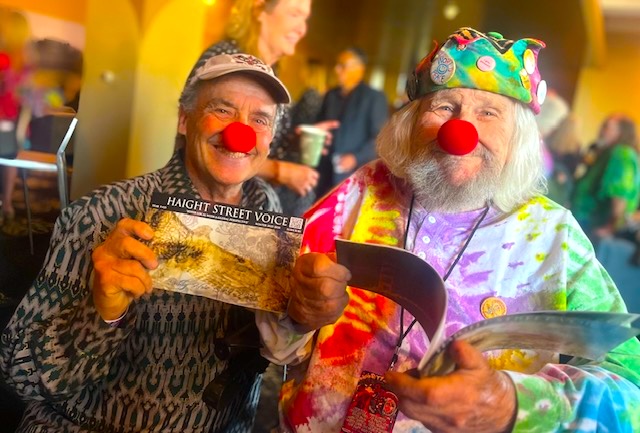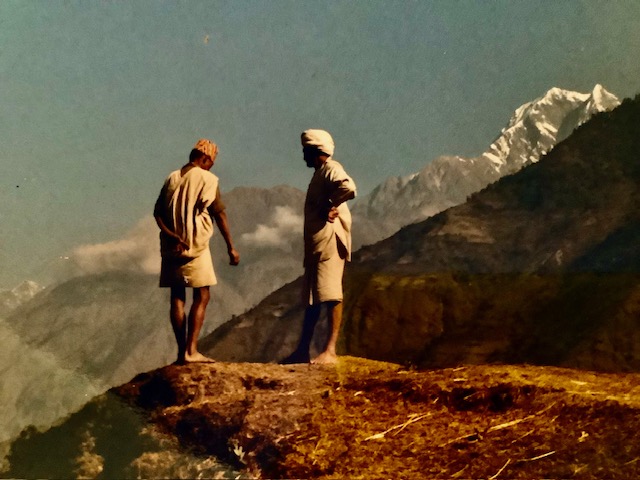
A deep discussion amidst the grandeur. Photo courtesy of Steve Heilig
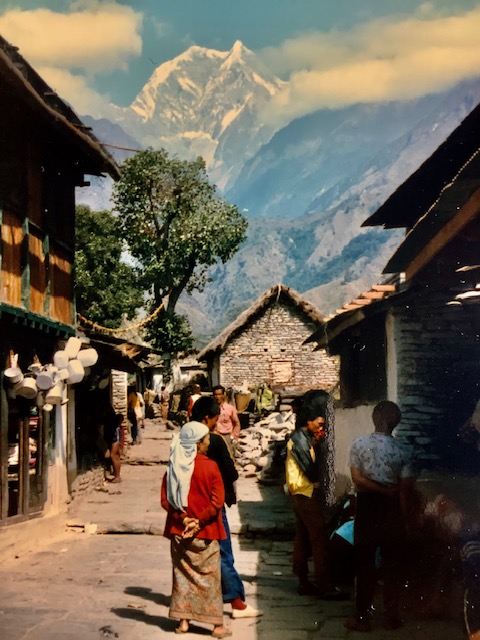
I stepped down the ladder off the top of the rickety brightly-painted bus, hauling my backpack with me, blinking as the loud smoke-belching old vehicle pulled away. I was the only one there on the roadside. I’d been riding West from Kathmandu for many hours, comfortably propped on the roof in a cozy pile of luggage and backpacks, looking north to towering snowy peaks with both awe and a vague nervousness that I would very soon be heading right up into those heights.
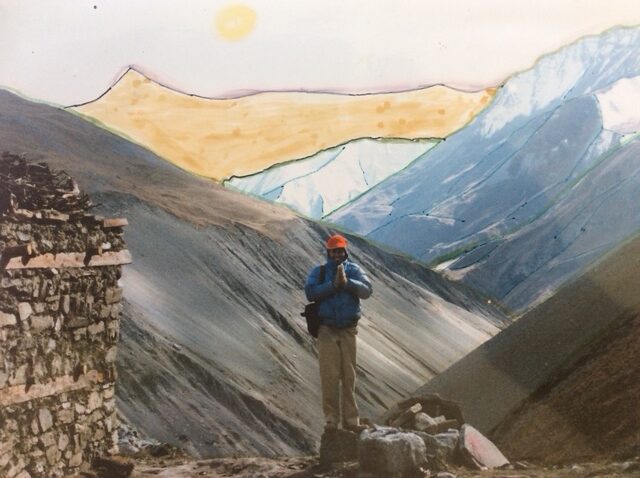
My first visit to Asia, and besides an idyllic adventure motorcycling around and across Bali, a long walk in the Himalayan mountains was to be the ultimate highlight. I had barely planned it, but knew I wanted to get out of Kathmandu – as enchanting as that was – and into the highest mountains on earth. So I chose the Annapurna Circuit, said to be the longest and highest Himalayan path, including earth’s deepest gorge the Kali Gandaki, covering about 200 miles, including the Thorong La pass at 5,416 metres/17,769 ft high. Why not go big?
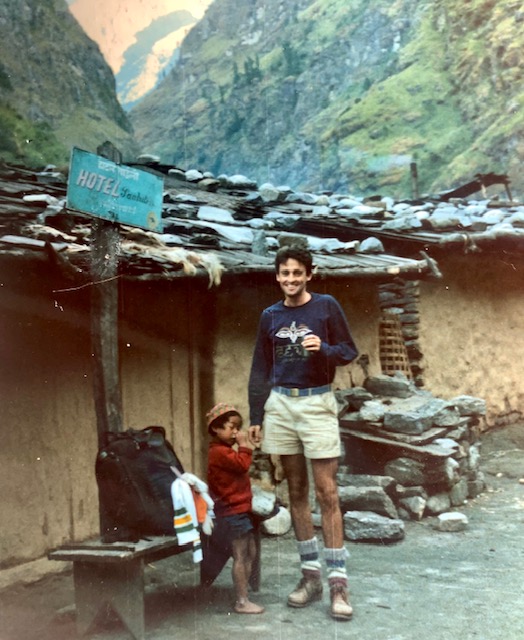
It was to be a solo month-long trek. I hadn’t really planned much but had a guidebook by a hardy American doctor who had done it a few years before. In Kathmandu I bought a hand-drawn map. I had my trusty backpack I’d hauled around Europe and into the Sierra, some newly re-soled custom hiking boots, and bought a used down parka from one of the recycled climbing gear shops in the Thamel district of the city. One could go lighter than when backpacking as it was standard to stay in homes rather than needing a sleeping bag, tent, and cooking gear. A bus ticket west and I was off.
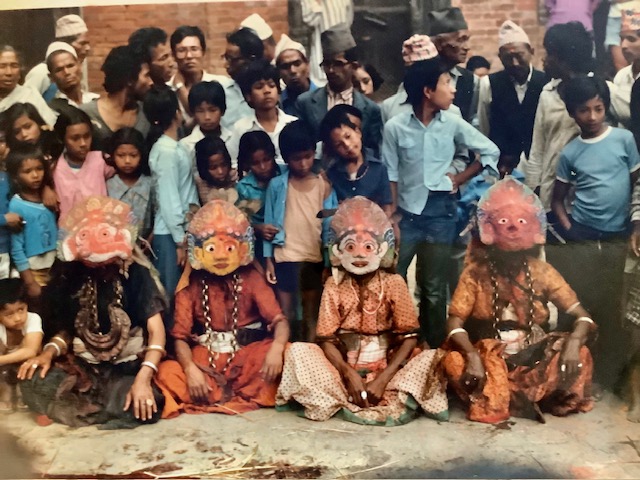
A ritual ceremonial animal sacrifice.
Riding on top of the rickety belching bus, nestled into the piles of luggage strapped on the roof, getting awe-inspiring glimpses of snow-covered peaks to the north, was a great start. At a little village I stepped off the bus into the biggest unknown of my life yet, and just started walking. For the next month there would be no roads, just footpaths. No phones or any contact w/anywhere else, or even electricity for much of it.
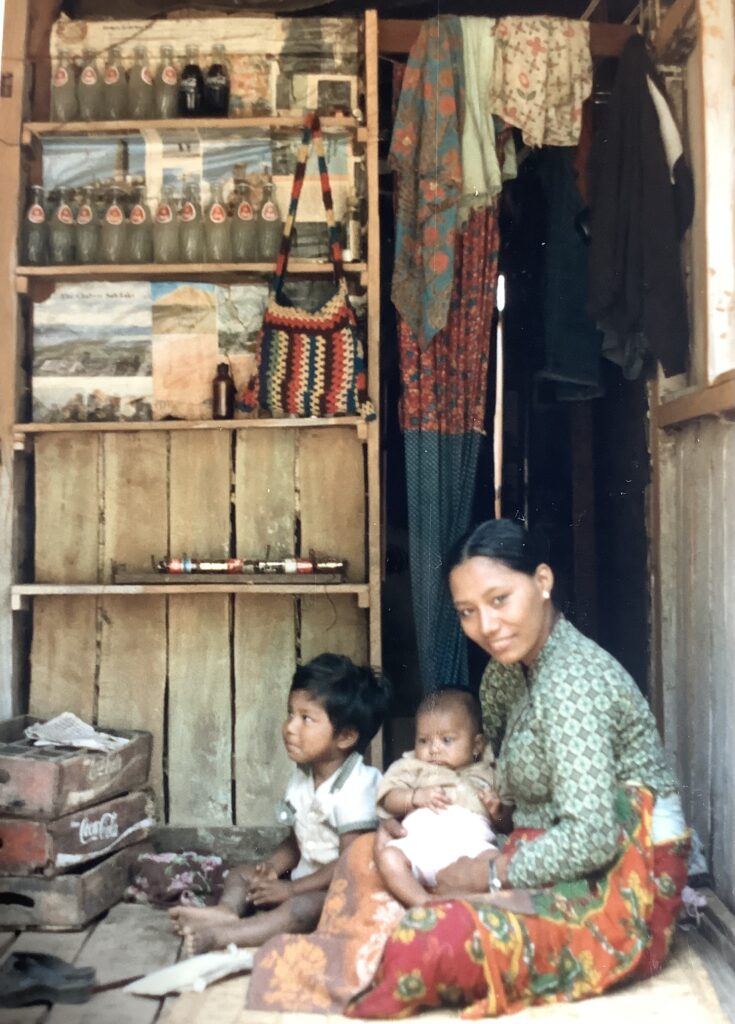
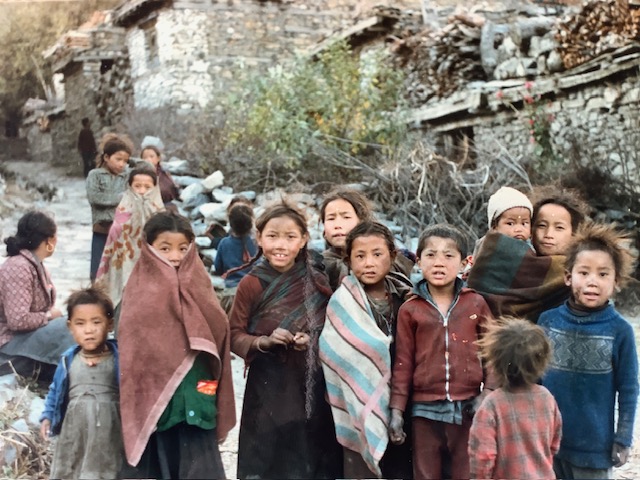
The ascent was very gradual, through valleys, walking 10-15 miles daily up rugged paths, along ridges and rivers, into ever more impressive gorges with sheer rock cliffs with brilliant snow on top. There were apple trees at 12,000 feet. Locals walked in bare feet carrying big loads to higher villages. Cooking was by fire, as was lighting. It often felt like nothing much had changed in centuries. Many hours walking thru vast silence. I communicated with the few Nepali or Tibetan people I encountered via gestures and smiles and bows and a few fractured phrases, and some pop songs (I’ve hoped ever since that a couple generations of villagers there might delight and baffle other Westerners passing through with gentle renditions of Roger Miller’s “King of the Road” or The Dead’s “Ripple”).
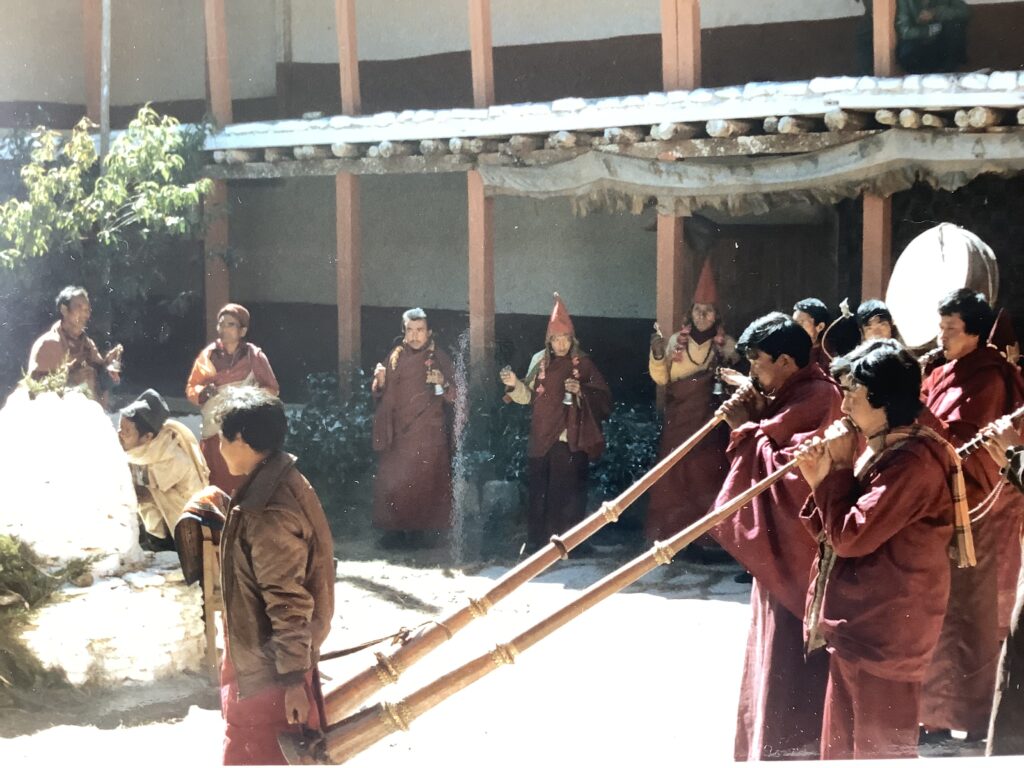
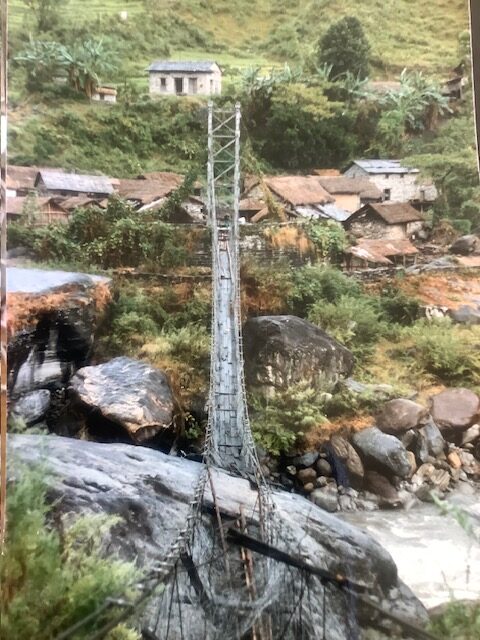
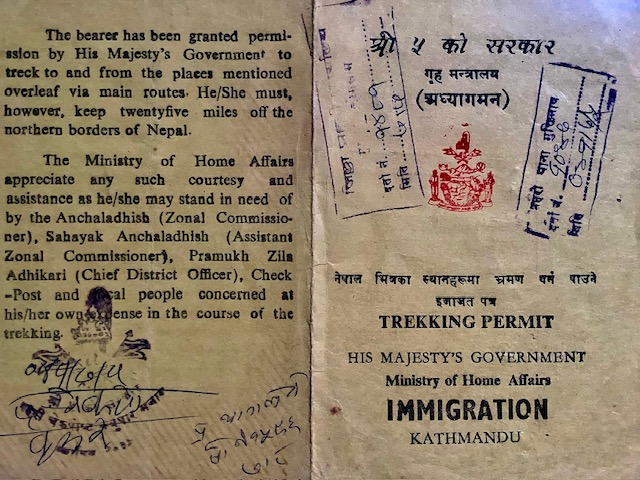
At the higher points no formal lodging was around but they took travelers in by tradition for survival, so I slept in barns with snorting yaks, for a few rupees, including two meals and chai, boiled for hours and free of bugs or parasites. Lived on solely dal bhat (lentils and rice) for the whole month, lost about 20 pounds (winding up way too skinny) but never got sick. In fact I felt great, if dehydrated a couple times. Constantly astounded by the scale of peaks and valleys, which made Yosemite look petite. Saw very few people up high, even fewer Westerners. Crossed surging rivers on rickety bridges, and scrambled through massive rockslides, aware that one slip could mean never being seen again. Snuck into Mustang/Tibet against the laws (I had a defunct World Health Association visa stamp and some official-looking papers from the Seva Foundation), gave forbidden Dalai Lama photos to tearfully grateful Tibetans. A couple of them tried to kiss my filthy feet in gratitude, but that was too much.
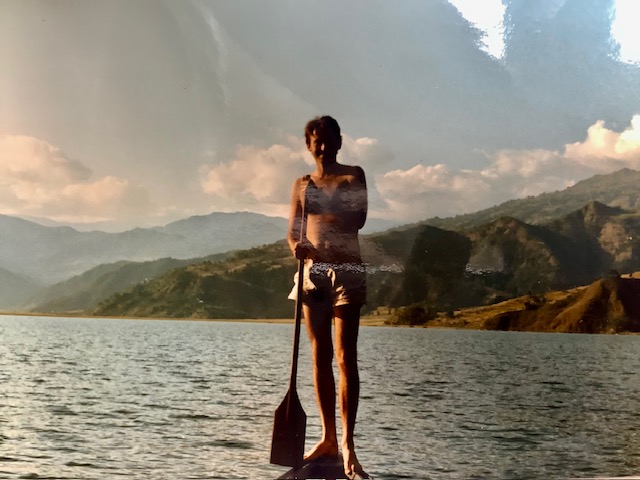
If I had to choose one travel experience I’d say this was probably the best journey of my now-long life on five continents. Not knowing what time or day or week or even month it was turns out to have been a real luxury. When I emerged in the relatively major town of Pokhara, with its newspapers/radio, the world flooded back in. Reagan had been re-elected in the USA, and much more world turmoil was rolling on, and I almost wanted to turn around and head back skyward. Never to be seen again? But too young, too much was calling me back, even tough I did spend a bit more time down in India – where Indira Gandhi was been assassinated sparking riots and chaos. Soon after that came the world’s worst industrial disaster in Bhopal. The wheels of dharma or karma or randomness spun on, as as the Buddha taught, suffering and impermanence are the eternal constants. Watching bodies burn by the sacred Ganges river in Varanasi, there was no denying such truths.
Kathmandu had been the terminus of the overland “hippie trail” from Europe since that late 1960s, and stragglers from that time were still around, such as a Scandinavian guy I met on a hilltop with awe-inspiring vistas who never paused in hitting his hashish chillum and said he’d been there “eternally.” There was, and I think still is, a Freak Street in Kathmandu – the Himalayan Haight? – and our Haight neighborhood itself has multiple Himalayan/Tibetan shops and food, seemingly thriving against the shifting tastes of time.
Though the mountains themselves are timeless, nowadays Nepal is a different place in many ways. Since I left from my last visit there has been severe political upheaval for decades. Some of the royal family were slaughtered in their palace by one of their own. Most recently, just last year, there was a youth revolt to take over the government of this poorest of nations. They have a daunting uphill struggle against corruption, deforestation, climate change, pollution – the “polycrises” of our era. Rivers are rising as glaciers melt. Squatters are displaced both by water and soldiers. Alas there is much more pollution and still far too much disease and early death. The superb and inspiring Seva Foundation soldiers on in many ways fighting at least one challenge they can and do remedy, blindness, supported by a broad range of supporters including the late lamented Bob Weir of the Grateful Dead.
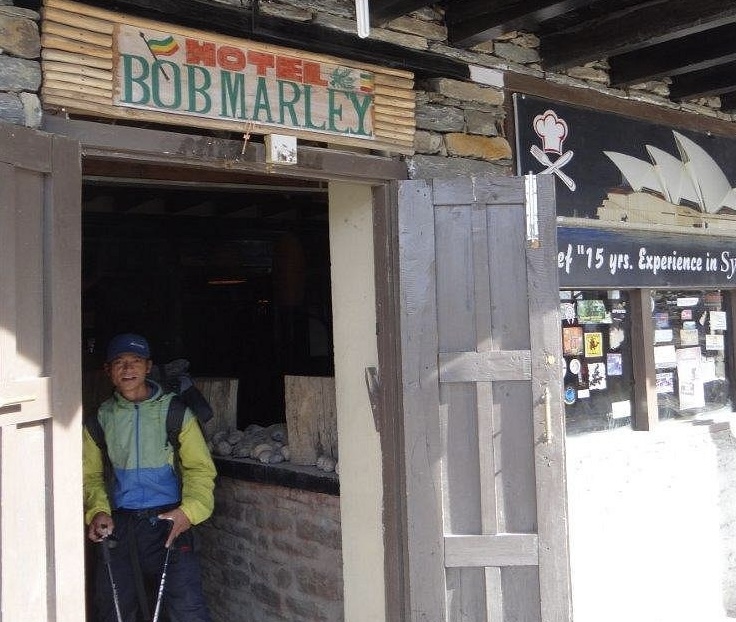
Culturally, modernization is a mixed blessing. So is tourism, bringing not only much-needed income but negative factors like the grotesque sex tourism by western men that has long afflicted other Asian nations. As for trekking, the internet has reached into many remote high areas, as have roads and commercial tours, with all that entails, good and less so. Facebook groups allow for trekkers to share info and there’s even a Bob Marley Hotel in one of the highest towns on the Annapurna route. Tourists bike over the passes, where before only feet trod. Personally I wouldn’t welcome lots of this – being fully cut off from the outside world and self-reliant was a prime aspect of my treks. In fact it was crucial to the experience and the memory.
But that is travel today – wherever one goes, it gets more and more crowded, more planned, predictable, westernized, expensive, and often safer, not to mention a factor in the looming climate crisis. It’s rarely true adventure now, but all a form of tourism. And now the USA is disdained worldwide, and rightly so. It might sound elitist to say, but travel no longer has any attraction for me. But then, I was fortunate to be able to get out and far away before the modern world crowded in most everywhere, plus I somehow settled in one of the best neighborhoods in one of the best cities anywhere: the fabled Haight. That’s just my dumb luck, but I’ll take it. And as the late poet Allen Ginsberg held: “Well, while I’m here I’ll do the work — and what’s the work? To ease the pain of living. Everything else, drunken dumbshow.”