by Linda Kelly
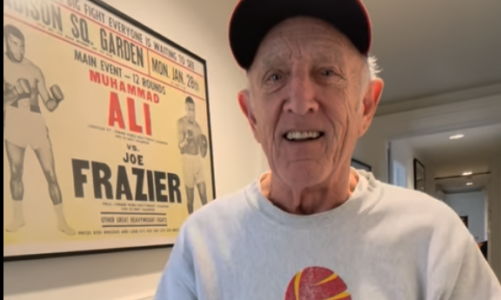
Original Merry Prankster George “Hardly Visible” Walker drove the FURTHUR bus across America along with Ken Kesey, Neal Cassady, Ken Babbs, and a handful of other Pranksters back in 1964. Upon their return, they held a 3-day experience called the Trips Festival at the Longshoremen’s Hall at Fisherman’s Wharf in SF in 1966. The following is excerpted from George’s wonderfully energized remarks at the Counterculture Museum on May 30, 2026 (where I had the immense joy and honor of meeting him) just after a screening of the Trips Festival, a film by Eric Christensen (2007).

“The thing that is constant throughout the film, what people spoke about, is change. It changed everybody. And it went beyond the people who were [at the Trips Festival]. Change is the essence of everything. In fact, it is ubiquitous with existence. Anything that stops changing literally stops existing.
Kesey used to say when confronted about all of this, the way that we changed the society, was that good or bad, and all these conversations — Ken always said, “You know, we get a lot more credit and a lot more blame than we deserve.” He said, “You know, we didn’t really make it happen all this stuff that happened.”
He said it’s like waves, all this change, Everything happens in waves. Literally everything at every level. All of the energy in the universe is in wave form at every level. And at the level of not just physical change but societal change. Ken said that a great wave happened in the ‘60s and we were just there. We were present, and we were able to ride the wave like surfers.
When Ken started taking these drugs with the government experiments, it was like he was tossed in the water and learned to swim. And he came around to all of us and started saying, “Hey! Try this!” He would throw us in the water and we’d learn to swim! So we were all in the water when this wave finally approached the shore. The ‘60s was a time when a rogue wave suddenly focused, all of the social waves that had been building since world wars and all of this stuff happening. And the invention of television, the evolution of all the electronic stuff — this was all happening, all of these levels of change, they all converged in the ‘60s. It was a time of ENORMOUS surf! (Laughter) Enormous possibility of change. And we were just there with our psychic surfboards, “Oh wow! Here comes a big one!” And we rode that.

Then we showed people, “Wow! Look at how you can ride this! This is not something like we saw last year or 10 years ago. This is a new thing and it’s more powerful than anything we’ve ever experienced.”
So we were just there at the right time with just enough preparation. We had learned to surf enough that when the waves hit we were able to ride them and we were able to show other people how.
We got a lot of credit, but we were just like all these other people. In this film, you see a lot of people who were ready to ride the wave. They knew how to experience stuff in a new way and how to live life in a new way.
What we’re doing now in the world is not sustainable. Humanity’s ways of dealing with the world are not sustainable. We’re not just living on the Earth. We’re eating it. We’re consuming our Home. It’s like … one time Mike Hagen rented a house and got cold in the winter and so he chopped up the floor to throw it in the fireplace to stay warm for one night. That’s a perfect metaphor for humanity today.
How do we fix that? We need to evolve individually and as a species. We need to evolve away from a greed-driven society. People selfishly trying to “Get more for me! More experience! More money! More stuff! More cars! More clothes! More food! More everything!” We have mistakenly thought that the way to do that is to keep somebody else from having it “so there’ll be more for me!” But that’s completely the wrong way.
We have to do it by sharing as much as we can, giving as much as we can, because the more we give, the more everybody is giving. And suddenly the more there is! It seems like almost impossible that in giving things away you have more, but it’s really the way the world works. I think we need to teach people the true laws of karma. That you don’t just gather as much shit as you can, use it up as fast as you can, eat as much as you can, gather as much wealth as you can, and then you die and that’s it, you’re done. However much you got, that’s what you did. Whoever dies with the most toys wins.
It ain’t like that. We have to learn to do this in a way that we work together not to consume the planet but to feed it. To look at the Earth as your garden. You’ve got to water it, you’ve got to till it, weed it, and deal with it in a way that you nourish it. And we have to nourish each other.
These kinds of experiences that we that we got from doing all this — the Acid Tests and the psychedelics and all the things that came from it, you start to learn about that. You start to lose that intense selfishness by sharing with people, by giving whatever it is that you have.
The Trips Festival was kind of like when it broke out of closet. We had done a few Acid Tests but we were kind of finding our way through this thing. And all of a sudden Ken and Stewart Brand and all these other people that participated in this decide, “Well, let’s do this on a bigger scale.” And suddenly it was out there and everybody was doing it.
Kesey was very conscious of wanting to eliminate that line between performers and audience. He wanted this to be a total participatory thing. The Dead were a unit, they were a thing. They would play but they couldn’t play all night long. They had to take breaks. And when they took a break, the Merry Pranksters would take the stage with musical instruments.

And if you were deaf and maybe partly blind you might think we were playing music! [laughter] I maintained that we were possibly the worst band ever. Kesey used to say, “I would rather play music with the worst band in the world than go and listen to the best band in the world.” And he also proved it. [laughter]
When we were playing, if somebody wanted to come up out of the audience and walk up on the stage and grab an instrument and start playing, that was fine. Or just come up and do anything, not even playing music. They could just come up on the the stage and just start doing whatever they felt like doing. And Kesey encouraged that. Sometimes it was weird and sometimes it was really cool.
This is what Kesey wanted people to do: to come and just do what you feel like doing without the thing of ego and judgement. It was a way of getting free of judgement. Because that’s what is one of our biggest hangups: being judged for what we do because somebody else thinks we should do it differently.
In case you hadn’t noticed, we’re in another time of great potential, of great change. The 2020s are a time of another huge set of social waves. The level of involvement that people have is growing. People are realizing there’s stuff going on. “Hold it! Wait! Stop! We’re on a runaway train and the bridge is out at the bottom of the hill. We’ve gotta change direction!” We’re seeing a time of tremendous potential. It’s happening now and it hasn’t peaked. It’s gonna continue to happen. There are bigger waves coming. More of them will happen and things are not going to be the same. If we pay attention — those of us who’ve experienced these kind of mind-opening and possibility-illuminating experiences — it’s on us to speak up, to act. If we do this right, we can surf this wave when it comes and we can all end up standing on the beach in the sun.”

FULL (unedited) TRANSCRIPT of GEORGE’S FAB TALK
The thing that is constant throughout all of this, the film [Trips Festival] the various interviews that spoke about it is change. It changed everybody. And it went beyond the people who were there. Change is the essence of everything. In fact, it is ubiquitous with existence. Anything that stops changing literally stops existing. The Einsteinium theory of the inter-relatability of matter and energy, it’s … energy is change, and matter is change. Things all change.
Kesey used to say when confronted about all of this, the way that you changed the society, was that good or bad, and all these conversations, and Ken always said, “You know, we get a lot more credit and a lot more blame than we deserve.” He said, “You know, we didn’t really make it happen, all this stuff that happened.” And he said, it’s like waves. All this change — everything happens in waves. Literally everything at every level. Everything. All of the energy in the universe is in wave form at every level. And at the level of not just physical change, but societal change happens in waves. And what Ken said is that a great wave happened in the ‘60s and we were just there. We were present essentially in the water and we were able to ride the wave like surfers.
And what Ken did when he started taking these drugs with the government experiments, it was like he was tossed in the water and learned to swim. And he came around to all of us, all of his friends and started saying, “Hey! Try this!” And he would throw us in the water, and we’d learn to swim! So we were all in the water when this wave finally approached the shore. And people who know surfing understand about how waves have a … they’re not just waves, waves, waves. They come in sets. There’s big waves and there’s little waves, there’s big waves and there’s little waves. And the sets come in sets. There’s sets of sets of big waves, and then there’s sets of sets of sets of even bigger waves.
And the ‘60s was a time when a rogue wave and all of these waves suddenly focused, all of the social waves that had been building since world wars and all of this stuff that was happening. And the invention of television and the evolution of all the electronic stuff that going on — this was all happening, all of these levels of change, they all converged in the ‘60s. It was a time of ENORMOUS surf! Enormous possibility of change. And we were just there with our psychic surfboards, “Oh wow! Here comes a big one!” And we rode that. And then we showed people, “Wow! Look at how you can ride this! There’s these waves happening. This is not something like we saw last year or 10 years ago. This is a new thing, and it’s powerful! It’s more powerful than anything we’ve ever experienced.”
So we were just there at the right time with just enough preparation. We had learned to surf enough that when the waves hit we were able to ride them. And not only that but we were able to ride them and show other people how.
And so the film was right; We got a lot of waves and a lot of credit, but we were just like all these other people. And in this film you see a lot of people who were ready to ride. They knew how to ride the wave. They knew how to experience stuff in a new way and how to live life in a new way in this new stuff.
What we’re doing now in the world is not sustainable. Humanity’s ways of dealing with the world are not sustainable. We’re not just living on the world, on the earth. We’re eating it. We’re consuming it. We’re consuming our Home. It’s like — one time Mike Hagen rented a house and got cold in the winters and so he chopped up the floor to throw it in the fireplace to stay warm for one night. That’s a perfect metaphor for humanity today.
So how do we fix that? We can’t just be something different from what we are. Drugs help us. LSD is a miracle. It’s magnificent in its ability to make us suddenly see things in a different way. You look at stuff and think, “Wow! I never thought it’d be like this!” But it is! It’s like this!” So it’s like, we can do this! We can have a different kind of experience. We can live in the world in different ways. But that’s not enough. We need to evolve. We need to evolve individually and as a species. We need to evolve away from a greed-driven society. Much of what goes on in the world, the basic driving force is greed. People selfishly trying to “get more for me! More experience! More money! More stuff! More cars! More clothes! More food! More everything!
And we have mistakenly thought that the way to do that is to “keep somebody else from having it so there’ll be more for me!” But that’s completely the wrong way. We have to do it by sharing as much as we can, giving as much as we can, because the more we give, the more everybody is giving and suddenly the more there is!
It seems like almost impossible that in giving things away you have more, but it’s really the way the world works. And so what we need to do is … I think we need to teach reincarnation. I think we need to teach people the true laws of karma. That you don’t just — you’re bored, you gather as much shit as you can, you use it up as fast as you can, you eat as much as you can, you gather as much wealth as you can, and then you die and that’s it. You’re done. However much you got, that’s what you did. Whoever dies with the most toys wins.
It ain’t like that. We have to learn to do this in a way that we work together not to consume a planet but to feed it, to look at the earth as your garden. You’ve got to water it, you’ve got to til it and weed it, and deal with it in a way that you nourish it. And we have to nourish each other. And these kinds of experiences that we that we got from doing all this — the Acid Tests and the psychedelics and all the things that came from it, you start to learn about that. You start to … well they talk about “ego loss”. You start to lose that intense selfishness by sharing with people, by giving whatever it is that you have.
The Trips Festival was kind of like when it broke out of closet. We had done a few Acid Tests — two or three or four, I can’t remember exactly — but we were learning a thing, we were kind of finding our way through this thing and all of a sudden Ken and Stewart Brand and all these other people that participated in this decide, “Well, let’s do this on a bigger scale.” And suddenly it was out there, and everybody was doing it.
It all kind of started in the summer before the Acid Tests began. People started coming around La Honda where Kesey was living and it kind of became a thing where Saturday night there’d be guests that would show up and we’d all take some psychedelics and it kind of turned into a psychedelic show and tell. People brought their little skits and things to do. There was an area right behind the house where the thunder machine sat, and it was kind of a natural amphitheater and Kesey would set up some sound and maybe a camera and microphones. And people would just come and kind of do stuff, and it started developing into an event. Almost every Saturday night, stuff would happen. The Hell’s Angels started coming, and they came several weekends and we partied. And Ken finally realized, you know, this was going to get us in even more trouble than we were already in. He says, “I gotta get this outta the house.” And that was why he decided to do the Acid Tests. It was self preservation. If we kept doing it there, it was gonna keep focussing more and more attention on Kesey and on the few of us who were there all the time. And for certain we were gonna get in trouble. Some of us did anyway. But Kesey realized we gotta get this outta the house, we gotta go and do it in public places.
It turned out that we were too slow them. They couldn’t catch us. They always came looking for us and gave up before we got there. [laughter] So that was the way it started.
The other thing that people have mentioned a lot that were interviewed in this film is that Kesey was very conscious of wanting to eliminate that line between performers and audience. He wanted this to be a total participatory thing. The Dead were a unit, they were a thing. They would play but they couldn’t play constant, they couldn’t play all night long. They had to take breaks. And when they took a break, the Merry Pranksters would take the stage with musical instruments. And if you were deaf and maybe partly blind you might think we were playing music! [laughter] I maintained that we were possibly the worst band ever. Kesey used to say, “I would rather play music with the worst band in the world than go and listen to the best band in the world.” And he also proved it. [laughter]
When we were playing, if somebody wanted to come up out of the audience and just walk up on the stage and bring an instrument or grab an instrument and start playing, that was fine. Or just come up and do anything, not even playing music. They could just come up on the th stage and just start doing whatever they felt like doing. And Kesey encouraged that. Sometimes it was weird and sometimes it was really cool. Some people came up and did really cool stuff and we talked about how, “Wow! That was a scene! Did you see how that guy …?!” There was a guy in Portland who I don’t think anybody knows who he is, or was. He looked like a businessman. He was in a business suit and he was carrying a — it was wintertime and he was carrying an umbrella. And he got acid, and pretty soon he was doing this thing, he started posing and he says, “The king walks! The king talks!” And he did this thing. He’s in character. He became this character of the king. And you could see that suddenly he was the king! And he did this for a minute or two. But it was something that was notable because it was real. He came and he did a thing and it was real. And he knew that he wasn’t really the king like Donald Trump thinks he’s the king [laughter]. He was in character and he knew he was in character and he was strutting around doing this thing. But he was doing it without ego. He was just doing a thing because it was what came into his head to do.
This is what Kesey wanted people to do: to come and just be something, do something, do what you feel like doing without the thing of ego and judgement and stuff like that. It was a way of getting free of judgement. Because that’s what is one of our biggest hangups: being judged for what we do because somebody else thinks we should do it differently.
[Commenting on AI]: A hammer is a wonderful thing. If you’re doin’ something and you’re putting together a lot of [?] and a bucket of nails, then a hammer is the best thing you could have in the world. But if you’re in an argument with somebody and he’s a real asshole and he’s got a hammer in his hand and he’s pissed and he’s gonna hit you with it — a hammer is a terrible thing! [laughter]. AI is the same thing. It’s just another hammer. Are we gonna use it to build homes for the homeless or are we gonna use that hammer to beat more people down?
Taking LSD and a lot of those other drugs was like throwing off your chains, for me. I grew up in a restrictive kind of environment and household, lotta rules, lotta expectations of what my life was supposed to be and how I was supposed to comport myself and all of that. I was never comfortable with it. But that’s the sort of thing that LSD does and psychedelics do, is they can — they don’t necessarily but they can break those chains, they can show the possibility of what you might do, what you might be. You realize, “My! There’s a lot more potential, a lot more possibility in the world than what we grew up learning, being told, being taught, and being directed to do. They all have the same ideas and we had new ideas. And finding new ideas is one of the great things that psychedelics can do for you.
I think that was a lot of what the Trips Festival and the stuff that came after, the Acid Tests that came after that, and all the stuff that continued to develop, it was like freeing us from chains, it was like opening doors into possibilities that we never imagined.
In case you hadn’t noticed, we’re in another time of great potential, of great change. The 2020s are a time of another huge set of social waves. The level of involvement that people have is growing. People are realizing, there’s stuff going on. Some people think it’s the greatest it’s ever been, and other people are saying, “Hold it! Wait! Stop! We’re on a runaway train and the bridge is out at the bottom of the hill. We’ve gotta change direction!”
But this is a time ..We’re seeing a time of tremendous potential. It’s happening now and it hasn’t peaked. It’s gonna continue to happen, it’s gonna continue, this wave. This isn’t the biggest wave of the set that’s happening. There are bigger waves coming. More of them will happen and things are not going to be the same. But if we pay attention — and those of us who’ve experienced these kind of mind-opening and possibility-illuminating experiences, it’s on us to speak up, to act, to do stuff. And if we do this right, we can surf this wave when it comes and we can all end up standing on the beach in the sun.
AUDIENCE QUESTION
I think the problem with astrology is that it’s so complex that it’s really hard to pin down. There probably are effects. I’m not gonna say, “That’s bogus!” And I’m also not gonna say, “Well, if you’re a Gemini like me, you’re going to …” I don’t think it works like that, but I think that there are effects. Everything interacts, and everything affects everything else. And so there are ways in which the positions of the planets, they’re these massive things with huge energy and they move around, and as they move around they create waves, and these waves all interact. They probably affect us. They probably affect us in ways that we can’t comprehend. But I think it’s difficult beyond our comprehension how to pin something down and to see what that effect is on any given situation, astrologically speaking.
[audience question]: The thing about the Merry Pranksters is that it kind of bridges the Beat movement and the Hippie movement. Did you have any realization that this was something new, this wasn’t Beat anymore, this is Hippie? How aware were you — I think one of the ways we can deal with all the challenges now is to look at historical transitions. That was a transition, and I just wonder, were you aware there was a transition going on?
GW: Probably not as much as you would like! [laughter] And not as much as I would like to brag about! I’d like to say, “Oh yeah! We were really enlightened! We knew all about that! We knew we were changing the world!” But no.
Brian Hassett has written a book called, How the Beats Begat the Hippies. [CORRECTION: How the Beats Begat the Pranksters]. And it’s really good. He wrote it in week. It’s amazing. He had this idea he was gonna make it kind of like an essay. We were working together. Brian and I were doing shows. We were doing readings from On the Road, in character. He would read in the character of Jack, and I would read in the character of Neal. And we could channel the characters and become these people. We would just read the script right out of the book. But with a lot of feeling and as characters.
And then we would diverge. We had a signal. He’d deliver a certain line and suddenly we would put away the script and we would ad lib, and we would just pretend a situation. I would pretend what I thought Neal would do in a situation, essentially, and he would do what he thought Jack would do in a situation. We were doing this a couple of years touring the country doing these shows. Brian got this idea: he realized how much we were doing had come from what the Beats had done, what Jack and Neal and all of them had done. And he told me one day, he said he was gonna do this essay, write a little essay about this. The next night he called me and said, “I had a flash last night as I was going to bed!” He said, “Do it as a book!” And I said, “Great idea, Brian! Write the book!” And he said, “Will you do the introduction to it?” And I said, “Of course!” And he said, “Okay, well write me an introduction …” and we talked a little about the theme of the book was gonna be about how there was a definite evolutionary continuation from where the Beats to where the Pranksters were.
So anyway, a couple days later he said, “How ya doin’? You got that introduction done yet?” And I said, “Well no, but I’m thinking about it.” And he said, “Well, I need that!” And I said, “Okay, I’ll get it.” And he called me a couple days later, it was like Thursday, and he said, “I need that by Saturday! Or Sunday morning. I need it by Sunday morning at the latest.” And I said, “Okay, no problem.” So I sat down Saturday night and wrote it in about 20 minutes and sent it to him. And he said, “That’s perfect! I love it!” So then he submitted the book, and he did a self publication. And from the time that he said, “I’m gonna do this as a book” until he had a box of book delivered to his door, complete, printed, bound, a finished product … 10 days! And I was like, “Wow! That’s amazing!” And it’s a good book. It’s not just a little thing, it’s a real book.
So yeah, there’s a dominant connection. And I became very close with Neal Cassady. In fact I was his last best friend. We went to Mexico and spent months in Mexico together and really became close. I got him to stop taking speed all the time. I was kinda trying to take care of him, which was kind of funny because he’s a lot older and has got this immense personality. Out of that, we became really close. And many years later, people would be, “God, you were so much like Cassady!” And I’d think, “What? Really? God he was this crazy guy.” And I always thought of myself as being fairly sane and conservative and I don’t talk very much, unless that’s what I’m doing. And he was talking all the time!
Then I started thinking about how I understood what Cassady’s movements were about, how he plotted or days cuz he was a schemer and a con man. And I realized, “I do a lot of that! And I do the same kind of judgments and the same kind of plans of how I do stuff and I was always momentarily afflicted by an idea. And I realized more and more that yeah, I really was a lot like him. God how weird is it to be like this crazy guy! But I was kind of like a sane Neal Cassady. But I was a lot like him. So anyway, he died as kind of as a result of this trip to Mexico. He went back to the place where we had been, San Miguel de Allende. He’d gone out with a girlfriend there and he went back to see her, and died.
A year later, almost exactly a year later, February of 1969, he appeared to me in a dream and he said, “Carry on the work.” And we had this conversation of sorts (laughs) you have mentally in a dream with a dead man. But it was a conversation and I’m asking, “Well, how? What do you want me to do? What am I supposed to do to carry on the work?” I knew what he meant was the work that he’d been doing. And that in itself was a mystery. What was he really doing? (Laughter) He was busy, but what was he doing?
Slowly I came to realize that it was about helping other people. Raise their consciousness. Trying to explain to people about stuff. And I said, “What am I gonna do? Take a lot of speed and start talking all the time?” And he said, “No, no! You do you. Be who you are, you’ll understand.” Then in the ensuing weeks, several weeks, he appeared almost every night in my dreams and we would have these conversations about how to carry forth.
And one of the things that stood out the most was that he wanted me to read. He wanted me to read about Edgar Cayce, The [Sleeping] Prophet. I knew that Cassady when he was alive he had become friends with the Cayce family. He and Carolyn were had become really avid followers and went to much of their meetings. He didn’t know Cayce himself, when he was introduced to us, until after Edgar Cayce had died. But he was friends with his son, Hugh Lynn Cayce, who was carrying on these meetings all over the country, and they were going to them. Cassady found a psychic and had life readings done, similar to the things that Cayce did.
One of my great regrets in life was … Cassady was always saying, “Hey! You gotta listen to my karma tapes! You gotta listen to my karma tapes!” And I was just like, the eye roll, that’s just Cassady’s insanity. A lot of what Cassady said you just kind of say, “Yeah, right …” because he’d just go on and on about stuff. But the more I was around him, the more I realized that there was substance to his stuff. So finally right away I started reading all about Edgar Cayce and as I was reading — and it was not just like in general. I was like, “Well, read the book about reincarnation. Read the book about karma.” Cuz those were the important things so that you understand what it was really about. And if you didn’t understand that — that was the essence of what life is about. And without that familiarity, you can’t do work! So I read that.
And when I would be reading, certain passages suddenly I would realize that his spirit was present. It was like he was underlining it saying, “That! Yeah that! That’s what I want you to read! I want you to know this!” And that kept happening for the better part of a year. The other thing that happened is that when I was at Ed McClanahan’s house, one of our writer friends, and Kesey may have been there and a bunch of us. He had this big house in Palo Alto right in town and we used to hang out there a lot. He had extra bedrooms and stuff. And we were hanging around his library and we got to talking about Cassady, and there was something that I grabbed to read, some of Cassady’s writing or something about Cassady, and I could suddenly channel him when I read him. And everybody said, “Wow! That was just like Neal!” And I realized, “Wow, I can do that. I can read that in character in a way that I can become animated and doing stuff like Neal did, and acting like him and talking like him. I could put that on.
It was years later when I ran into Brian. I’d met him years before and I hadn’t seen him in 20 years. We were at an event, Merry Prankster’s … they called it the Twanger Plunkers Reunion. It was in Indiana of all place [laughs]. And Brian showed up and we reunited after years. He was doing a thing called The Beat Cafe. He would do poetry readings, readings from Kerouac and other Beat writers, and tell stories. And he did this. It was a really neat show. Afterwards, it was the beginning of this weekend, he said, “Well, what’dja think?” And I said, “Oh it was really good!” And then I said, “I could do Neal.” He said, “What?” And I said, “Yeah, if you want to read, I could do Neal. We could read stuff together.” And he said, “Really?” And I said, “Yeah!” So he said, “Okay!” And he went that night into town to a copy shop and he took his copy of On the Road and he did some Xerox sheets of I think just one of the dialogs. And he color underlined — highlighted in two different colors, Neal and Jack. He handed it to me and he said, “Here. I came up with this.” And I said, “Oh good!” And he said, “Show me what you can do.” And I said, “Okay! Let’s just do it.” And said, “Okay, you wanna read it first?” I said, “No, I don’t need to read it. Let’s just do it.”
So he started off and he’s reading Jack and I’m reading Neal. We read through these couple pages of dialog and he said, “Wow! That was amazing! That was just incredible. You really can do that!” And I said, “Well, I told you I could!” [laughter] Because I knew I could. Once I got into that, it was like Neal was there. He was just like runnin’ me. It was almost like I wasn’t myself. And so we did it for the gathered crowd that was there, and everybody said the same thing. One of the women there who knew Neal said, “Wow! That was Neal. That was real Neal.”
And so we expanded it. We picked out a dozen different dialogs out of On the Road and we took it on a road show. We went around doing these performances. And the whole point of this is: the more I did it, the more presence of Neal I felt. The more I felt like his spirit was still around me. Like, watching over me. At one point I even mentally said to this Neal spirit that I felt was there, I said, “What took you so long?” And his response was, “What took YOU so long?” (Laughter)
AUDIENCE (ME!): So you Prankster name was “Hardly Visible”. What was that about? And what was your task?
GW: The nicknames that we had came about in various ways. Some of them were meant to be real, and some of them were kind of ironic. Mine was kind of both. It came about — I think it was the very first acid trip that I took at La Honda. The first time I’d ever taken acid. I’d taken psychedelics for years but never any LSD.
At that time I was still in my Beatnik mode. I was wearing black turtleneck shirts and the black beret and having a goatee and playing that role, being in character as a beatnik. And then suddenly everything turned to technicolor! It was like in the Wizard of Oz when they get to Oz! The movie starts out in black and white, and they get to Oz and suddenly it was technicolor! Taking LSD was like suddenly technicolor. And I looked at myself and I thought, “This isn’t it.” And I went into another room and gathered all the bright clothes I could find and put ‘em on. I came back into the room and Hagen saw me and he said, “Ah! There’s George! He’s hardly visible!” [laughter] And there it was.
But the other things is I was always very introverted. And I had learned early on that I learned a lot more listening than I did talking. And so I didn’t talk very much. I just kind of laid back and watched things happen, and then I would fill in what I thought would make it happen more. So I really was kind of invisible a lot of the time.
I’m a Gemini, so I have this duality to me of Gemini, so I’m an example of how that does match up because I manifest both introvert and the extravert. I have both personalities. And I can do one or the other — or both! So that name fits that. I fit both sides of that: The ironic cuz I dress in psychedelic clothes a lot, and also I’m quiet and observing a lot. So I think that’s the answer to your question!
(Audience question)
GW: Kesey was a big believer in the iChing. He read it religiously. I think he threw the iChing every day of his life once he discovered it. We would often do a group Ching, where he’d hand out the coins … he had special coins that Page had made for him. He’d taken pennies and beat them large and thin, and some of them had 2 lines on them and some of them had 3 lines on them. And sometimes Kesey would throw all 6 of ‘em, and sometimes he would hand them out and everybody would throw one. We’d do a group iChing, and then Ken would read it, read the lines, and we’d try to relate that to whatever it was that we were doing at that time. And when Ken came to something where he had to make an important decision about something he wasn’t sure about, he’d throw the Ching and see what it told him and try to find some wisdom to make a decision.
Another one that he and Babs both read — I read it a little of it and I just thought, “Nah.” It was the Urantia Book. I don’t know if any of you know the Urantia Book. Kesey referred to it as kind of the cosmic manual for running a county (laughter).
There was always a lot to laugh about, about the stuff we did, which is a lot of what kept me interested. I always like to laugh. We always had a lot of stuff to laugh about.
(AUDIENCE asks about Ken and two tape recorders)
GW: This was a thing that Kesey invented. He’d have two or three reel-to-reel tape machines sitting side by side on a table, with the one tape go from one machine through the next machine through the next machine to the take-out wheel, and he’d have wires hooking them together: output from one and the input to the next and the input to the next — and what it would do is it was an echo machine, because you’d record here and then it would playback and it was all plugged into a sound system. It was all amplified with speakers.
I found out you could drive people insane with it. (Laughter) The summer of ’66 when we were down in Mexico — we all kind of escaped kind of right in the middle of the Acid Tests. Several of us took the bus and left everybody else. And we left Cassady behind. Kesey was already in Mexico. He was already exiled cuz the cops would chase him. So we arranged to meet him on a certain date at noon in Mazatlan. And as a miracle would have it, we both made it! We were there with the bus on the beach in Mazatlan, and Kesey and … who was with him … Zocker ??? I think … came walking up. They were there right on time. And then we went on down the coast to Manzanillo.
But then we realized we should’ve gotten Cassady. So Kesey sent me back to California to fetch Cassady in the middle of the summer. And among the that I did was I went out to Olompali where the Dead were living and having stuff happening. I was out there one Sunday with Neal and we took acid and there was a big party. And Owsley was there, and Owsley was always wantin’ to do something. So Owsley got on my case and he — cuz he knew I was part of this scene that Kesey created and he said, “How’d you guys do that tape thing? How’d you do that? Show me how you did that!” And I’m as high as can be! I’m like, “You’ve gotta be kidding me, man. You want me to do something? (Laughter) But I managed to. I said, “Okay, you’re gonna have to put it together but I’ll tell you what to do.” I said, “We need 3 reel-to-reel tape recorders, and we need amplifiers and speakers playing to the crowd. And microphones to feed input into the tape recorders.”
And so Owsley spent his usual hour hooking all this shit up with big Macintosh power amps and state-of-the-art tape recorders cuz he always had good gear. He had plenty of money and good gear. And he says, “Where does this go?” And I say, “Okay, plug the output of that one into this one. And plug the output of that one into this one …” And finally he got it all done and there was microphone on the stage, and some girl — who was also high — started singing and talking to the microphone. And it wasn’t long at all before she flat freaked out, cuz her voice was coming back, and then it was coming back, and then it was coming back, and then it was coming back … (laughter) She lost it! I mean she flat went nuts. I think later she was okay, but it really blew her mind.
And Owsley thought that was just the finest thing he’d ever seen! (Laughter) He never, ever, I think til the last day of his life, quit hounding me about telling him again how to do that. And I never did. I never had a chance to sit down with him and actually show him how to do it. But he so much wanted to be able to do that.
Owsley … the first time I met Owsley, we were in McClanahan’s house when he stilled lived up by Kesey in La Honda. And Owsley showed up with — now I can’t remember … probably Lee Quarnstrom who also lived there. But anyway, we had just started doing the Acid Tests and he knew who we were and what we were doing. And he knew that I was the guy who had gotten all the acid for the Acid Tests. I’d gotten it from Dick Alpert who was getting it from the Sandoz factory in Czechoslovakia. It was really good acid. It got pure stuff. I got a little vial like that (teeny finger gesture) that was like 500 doses. And I had to do all this other stuff with it and have the mad chemist help me out and stuff like that.
Owsley said to me after we’d kind of been introduced and we’re talking, he said, “The reason I’m doing all this, making all acid, is that I wanna have the power over the whole movement.” And that frightened me. I thought, “Holy shit, man. I wonder how much I wanna tell this guy,” Because I realized that he had a streak of megalomania in him. He really meant it when he said he wanted to be the guy with the power. He wanted to be the guy with the power. He wanted to have some kind of control over what was going on — not just to help make it happen. He wanted to control stuff.
We always accepted Owsley with a grain of salt. A grain of sugar! He was brilliant but he was also crazy. Like everybody. We’re all crazy. In case anybody in here thinks they’re not crazy, you’re wrong! (Laughter) I have never in my life met anybody that wasn’t crazy — myself included. I think of Earth as kind of a cosmic insane asylum. And whoever it is that’s committing us never made a mistake. We are all crazy!
As an example of how Owsley liked to have power over you: we’d go to Berkeley to get some acid. When Neal and I were going to Mexico, that was our last stop. We went up to Berkeley, had to spend the whole night with Owsley. We went up there in the evening and he strung us out all night long, all the time intending to give us a very large bottle full of acid tabs, like a couple hundred of them, which was far more than we would ever take. We ended up trading it for a boat! (Laughter) Which saved our lives … almost after killing us. I’ve got to remember this whole sequence at some point because it’s absolutely a book in its own right.
This guy who showed up, he was a thief. He was a credit card thief and he went around buying stuff on a credit card and then selling it for cash. And the credit cards were all bogus, they were all ones that he had stolen or faked or whatever. So he never paid for any of this stuff and the cops were chasing him by then. Somehow he found out where we were in this house way outside Puerto Vallarta, 8 miles out of town through 3 or 4 rivers you had to drive through to get there. But he showed up with his boat and his truck and his boat trailer in tow knowing that the cops were only two towns away from him. Stories about shootouts in some trailer park. And having appendicitis and having to do his own appendectomy! (Laughter) This was all part of this guy’s rap was he introduces himself to us and tells us who he is and he runs this story that takes him 2 or 3 hours to tell and how he ended up in our house. And Cassady is just sitting there [gestures nodding his head] (more laughter)
But anyway, this was a time when one of the biggest shows on television was The Fugitive. So one day he showed up — he’d stayed at our house — he showed up, he was in Puerto Vallarta for several days and he showed up at the house one day and he says, “I gotta go. My Girard is in town.” Girard was the cop that was chasing the Fugitive! (Laughter) So he said, “My Girard is in town, I gotta leave. I can’t take the boat. What do you got to trade me for the boat?” And I said, “How about a bunch of acid?” And he said, “I’ll take it!” (Laughter) We dumped out a few for ourselves.
Cassady had done a thing during that time. He said, “I’m gonna do something. I’m gonna try something here.” He said, “I’m gonna take a hit of acid today. I’m gonna take 2 tomorrow. I’m gonna take 3 the next day. I’m gonna do it for a week. I’m gonna take 7 hits of acid. I wanna see what happens.” He quit on the fourth day because he couldn’t feel a thing. You build up a tolerance for it and you can’t get high every day. But he thought by taking more and more he could but he found out he couldn’t. On the fourth day he said, “That’s it. No point. Just a wasted effort doing this.”